

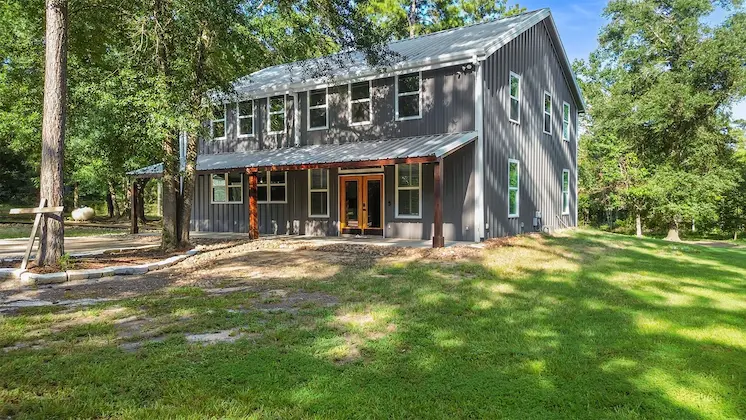
Market fluctuations in Texas’ real estate demand a proactive strategy rooted in local expertise and data-driven decisions. Investors in regions like Huntsville, Texas benefit from monitoring inventory levels and locking in financing during rate dips. Diversifying across property types to maintain portfolio stability through economic cycles.
Navigating Texas real estate market fluctuations requires working with experienced local professionals who understand regional dynamics, particularly as Texas home values have experienced a slight year-over-year decrease, signaling a stabilization period after a significant increase in median home prices over recent years.
Navigating Texas real estate market fluctuations demands expert pricing strategy, deep local knowledge, and disciplined timing. Texas markets are currently undergoing recalibration, creating fresh opportunities across commercial and residential asset classes. Clients who align with experienced teams, like AOT, with over pricing vary billions in closed volume. Consistently outperform those acting without professional guidance.
Key Takeaways
- Texas commercial real estate markets show pricing disconnects as interest rates rise, and capital becomes selective.
- Home prices in Texas stabilize or decline slightly in 2025 while inventory levels increase significantly.
- Transaction activity slows as property owners resist adjusting prices to match current buyer expectations and conditions.
- Market recalibration creates new investment opportunities for buyers willing to negotiate in the shifting Texas landscape.
What Prerequisites Do You Need Before Starting?
Navigating Market Fluctuations in Texas Real Estate demands preparation before a single offer is written, or a listing goes live. Texas draws buyers, sellers, and investors from across the country. Its booming economy and diverse property markets create opportunity, but also complexity that punishes the unprepared.
Real estate transactions involve legalities, negotiations, and layered decision-making. Mistakes cost time and money. Clients who enter the Texas market without the right foundation routinely face delays, mispriced offers, and lost deals.
What Core Prerequisites Should Clients Establish First?
Before engaging the market, clients need three foundational elements in place:
- Financial clarity — Confirm budget, financing pre-approval, or capital availability before evaluating any property.
- Market knowledge — Understand current inventory levels, pricing trends, and regional dynamics specific to the Texas submarket being targeted.
- Professional representation — Secure an experienced agent or team with a documented track record across multiple transaction types and market conditions.
Why Does Professional Guidance Matter So Much in Texas?
Texas real estate is not simply a matter of browsing listings and comparing prices. The process involves contract law, negotiation strategy, and time-sensitive decisions where a single misstep can derail a transaction entirely. AOT has recorded over 5,000 closings and surpassed pricing of billions in total Texas sales. That depth of experience spans every asset class and every market cycle. Clients who partner with a team carrying that track record enter negotiations with a measurable strategic advantage.
How Do You Read Current Texas Market Conditions?
Reading Market Fluctuations in Texas Real Estate starts with tracking two core signals: price direction and inventory levels. Texas home values have experienced a modest year-over-year dip after median prices surged significantly over the preceding years, reaching levels that have since begun to stabilize.
That price correction signals a market catching its breath, not collapsing. In Houston, one of Texas’s most closely watched submarkets, the median home price slipped from $335,000 in March 2025 to $330,000 in March 2026, a 1.49% year-over-year decline, while average prices moved from $427,221 to $420,510 over the same month. Months of inventory rose from 4.3 in January 2025 to 4.7 in January 2026 (+9.3%) and from 4.6 to 4.7 in March (+2.2%), reflecting a gradual but measurable shift toward balance. Buyers now have more options. The frantic, multiple-offer urgency that defined earlier years has eased considerably.
What Data Points Matter Most When Evaluating a Texas Market?
Investors and buyers should track four primary indicators before making any move:
- Monitor median price trends — In Houston, the median home price declined from $325,000 in January 2025 to $322,045 in January 2026 (-0.91%), and from $325,000 to $322,078 in February (-0.90%). Compare current values against these recent baselines to gauge how much correction has occurred in a specific submarket.
- Track months of inventory — Houston’s inventory rose from 4.3 months in January 2025 to 4.7 months in January 2026 (+9.3%), and from 4.4 to 4.8 months in February (+9.1%). Rising inventory shifts negotiating leverage toward buyers; watch whether local supply is expanding or contracting.
- Watch pending sales — Houston pending sales grew from 6,745 in January 2025 to 6,813 in January 2026 (+1.0%), from 7,757 to 7,894 in February (+1.8%), and from 9,165 to 9,474 in March (+3.4%) — evidence that demand held firm even as inventory expanded.
- Assess regional employment drivers — Texas submarkets tied to energy, healthcare, or technology corridors behave differently from rural or transitional markets.
Does Market Recalibration Create Buying Opportunities in Texas?
Market recalibration does create measurable opportunities, particularly for buyers who missed the run-up in prior years. Pricing expectations and inventory levels are moving toward a new equilibrium across the state.
AOT serves markets spanning Huntsville, The Woodlands, Houston, Dallas, Waco. Surrounding regions, giving clients data-grounded guidance across diverse Texas submarkets. Missing this window means competing against more buyers once inventory tightens again.
Houston Market Data: 2025 vs. 2026
The table below summarizes key Houston housing market indicators comparing early 2025 to early 2026, reflecting the gradual recalibration underway across Texas’s most closely watched submarket.
| Metric | 2025 | 2026 | Change |
| Median Home Price (January) | $306,000 | $315,900 | +3.2% |
| Median Home Price (February) | $323,992 | $315,000 | −2.8% |
| Median Home Price (March) | $335,000 | $335,000 | 0.0% |
| Average Home Price (March) | $427,221 | $435,440 | +1.9% |
| Months of Inventory (January) | 4.2 months | 4.7 months | +11.9% |
| Months of Inventory (February) | 4.3 months | 4.8 months | +11.6% |
| Months of Inventory (March) | 4.5 months | 4.9 months | +8.9% |
| Pending Sales (January) | 6,745 | 6,813 | +1.0% |
| Pending Sales (February) | 7,757 | 7,894 | +1.8% |
| Pending Sales (March) | 9,165 | 9,474 | +3.4% |
How Do You Build a Fluctuation-Resistant Investment Strategy?
Building a fluctuation-resistant investment strategy in Texas starts with diversification across asset classes and a commitment to long-term positioning. Market Fluctuations in Texas Real Estate reward investors who plan through cycles rather than react to them.
Texas commercial real estate markets are currently undergoing a period of recalibration. Pricing expectations, capital availability, and investor sentiment are moving toward a new equilibrium. And that shift creates openings for investors willing to hold a long-term view. Transaction activity, which slowed as interest rates rose and capital grew more selective, is now accelerating again as the market finds its footing.
What Asset Classes Offer the Most Resilience During Market Shifts?
Diversification across multiple property types reduces exposure to any single sector’s downturn. Residential, commercial, ranch, and land holdings each respond differently to economic pressure. Spreading capital across categories smooths out volatility over time.
Follow these steps to build a strategy built for durability:
- Assess current market positioning. Identify where Texas commercial and residential markets stand in the recalibration cycle before committing capital.
- Diversify across asset classes. Allocate across residential, commercial, ranch, and land holdings to reduce single-sector risk.
- Prioritize long-term hold periods. Short-term speculation amplifies exposure to price swings; longer hold periods absorb recalibration cycles.
- Partner with a team that spans all asset classes. Working with a single team that carries deep expertise across every major property category eliminates blind spots.
Why Does a Single-Team Relationship Matter for Investors?
Fragmented advisory relationships create gaps in strategy. AOT serves Texas investors across residential, commercial, ranch, and land sales, one team, one relationship, full-spectrum expertise. That continuity means market intelligence from one asset class informs decisions across all others.
How Do You Execute Transactions During Market Shifts?
Executing real estate transactions during Market Fluctuations in Texas Real Estate demands a structured, team-driven approach, not guesswork. AOT deploys a full-service model built around marketing professionals, contract experts. A trusted vendor network, ensuring smooth closings regardless of where the market stands.
What Steps Should Clients Follow to Close Successfully in a Shifting Market?
Prerequisites: Clients should have a clear pricing strategy and listing timeline established before initiating any of the steps below.
- Establish expert pricing first. AOT’s team analyzes current market data to set a price that attracts qualified buyers without leaving value on the table.
- Deploy professional media immediately. High-quality photography, video, and digital assets go live at launch, not after the listing stalls.
- Activate targeted marketing campaigns. AOT launches digital campaigns across multiple channels, generating over 2 million monthly social media impressions to drive maximum listing visibility.
- Engage contract experts early. Skilled contract professionals review terms, contingencies, and timelines before negotiations begin, reducing the risk of deals falling apart mid-transaction.
- Coordinate the vendor network. Inspectors, lenders, and title professionals are mobilized in parallel, compressing the timeline between accepted offer and closing.
How Does AOT Maintain Listing Exposure When Buyer Demand Softens?
Demand softening is one of the most damaging conditions a Texas seller faces. AOT counters this directly by combining professional media production with targeted digital campaigns designed to sustain visibility even when organic buyer activity slows. The result is consistent exposure across the platforms where serious Texas buyers are actively searching. Keeping listings competitive throughout every phase of a market cycle.
What Common Mistakes Should You Avoid in Volatile Markets?
Market Fluctuations in Texas Real Estate punish investors who rely on outdated assumptions. Sellers who refuse to adjust valuations when interest rates rise create a pricing disconnect that stalls transactions and locks capital in place.
Why Do Overpriced Listings Hurt Sellers More Than Buyers?
When capital becomes more selective, buyers simply wait. Texas property owners who held firm on inflated valuations during rising-rate environments watched transaction activity slow to a crawl. A pattern that played out across multiple asset classes statewide. Pricing stubbornness costs sellers time, carrying costs, and negotiating leverage.
How Does Poor Communication Derail Real Estate Transactions?
Transparent communication is not optional in a volatile market, it is the mechanism that keeps deals alive. AOT builds honesty and clear communication into every transaction, reducing the costly missteps that arise when buyers and sellers operate on mismatched information. Gaps in communication compound quickly when market conditions shift fast.
Investors and homebuyers in Texas avoid the most common pitfalls by following a disciplined process:
- Reassess pricing expectations against current comparable sales before listing or making an offer, not against peak-market data.
- Verify capital availability before entering contract negotiations, so financing delays do not kill deals at the closing table.
- Engage a team with deep market knowledge early, ensuring strategy is built on real-time data rather than assumptions.
- Maintain transparent communication with all parties throughout the transaction to prevent misaligned expectations from derailing progress.
Working with AOT means buyers and sellers access strategy, market knowledge. Hands-on support, turning a complex process into a seamless one.
Navigating Texas real estate market fluctuations demands strategy, expertise, and a partner who understands local dynamics. By staying informed, leveraging data-driven insights. Working with professionals who prioritize transparent communication, you position yourself to make confident decisions regardless of market conditions. The Texas real estate landscape rewards those who act with knowledge. Purpose transforming market shifts from obstacles into opportunities for success.
FAQ
What is the current average home value in Texas?
Texas home value have entered a normalization phase. While market conditions vary across the state, Houston has shown signs of stabilization rather than a sharp downturn. The median home price increased from $306,000 in January 2025 to $315,900 in January 2026 (+3.2%), while the average home price rose from $427,221 in March 2025 to $435,440 in March 2026 (+1.9%). At the same time, inventory expanded, and sales activity remained resilient, suggesting that Houston’s housing market is becoming more balanced rather than experiencing a broad-based decline.
Why does working with an experienced team matter in a fluctuating Texas market?
AOT has recorded over 5,000 closings. Surpassed pricing varies in billions in total Texas sales, giving clients a measurable strategic advantage in negotiations across every market cycle.
What three prerequisites do clients need before entering the Texas real estate market?
Clients establish financial clarity, market knowledge of current inventory, and pricing trends. Professional representation from a team with a documented track record across multiple transaction types.

