

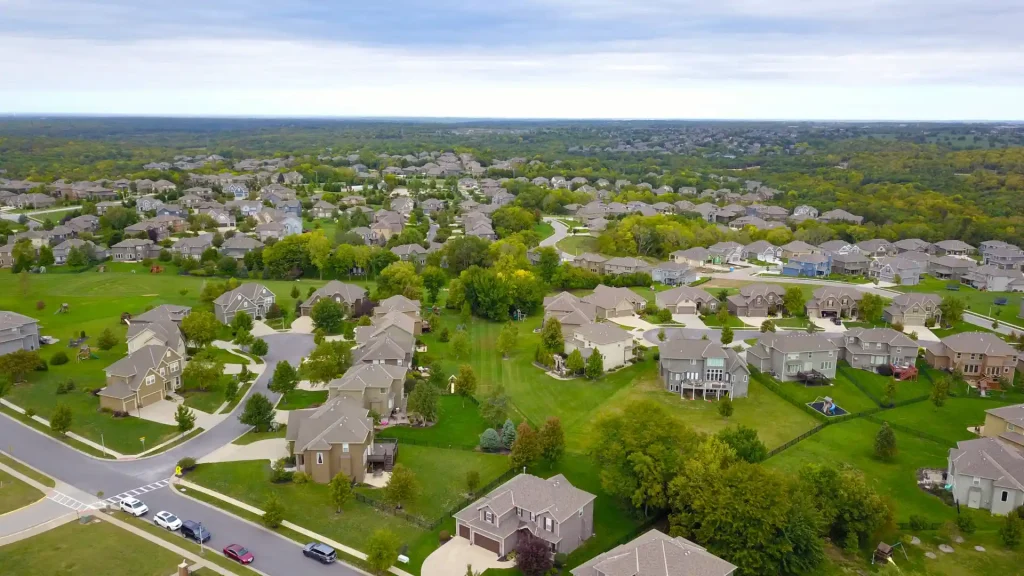
Location is one of the most important factors influencing a home’s value. Two houses with similar layouts, square footage, and finishes can sell for different prices depending on their surroundings. School attendance zones, access to parks and employment centers, nearby traffic, and neighborhood amenities can influence buyer demand and pricing. Understanding these differences helps buyers and sellers evaluate a property’s position in the local market.
For buyers, sellers, and investors across Texas, understanding how location affects real estate value is the difference between guessing and making an informed decision. The Adam Olsen Team has guided more than 5,000 property sales and over $1 billion in closed volume, and that experience, reinforced by local market data tracked by the Houston Association of Realtors, consistently points to the same conclusion: location drives value more than any renovation, upgrade, or finish ever will.
What Makes Location the Top Value Driver?
Ask any experienced agent what matters most when pricing a home, and location tops the list every time. Before condition, before square footage, before the age of construction, buyers decide on a neighborhood first and a house second. Real estate professionals, including the National Association of Realtors, have long pointed to location as the top factor in fair market value, with size, condition, and age all ranking below geographic placement.
The reason location carries so much weight is permanence. A dated kitchen can be remodeled. A cramped layout can sometimes be reconfigured. A house cannot be moved to a better street, a stronger school zone, or a quieter block. That fixed position locks in value, for better or worse, for as long as the home stands there.
Why Does Location Outweigh Property Condition?
Condition is something an owner can change. A worn bathroom becomes modern with a renovation budget. Location doesn’t work that way. A home on a busy road stays on that road regardless of how well it’s maintained. A well-kept house in a declining area can lose value faster than a fixer-upper in a neighborhood on the rise, because buyers are paying for the address as much as the structure.
How Much Can Location Shift a Home’s Price?
The swing between two nearly identical homes can run into six figures once location is factored in. A house tucked into a quiet cul-de-sac often sells for noticeably more than the same floor plan facing a busy highway, and that gap tends to hold steady across both strong and slow markets. Understanding what drives residential real estate value starts with accepting that the map matters as much as the materials.
How Do Neighborhood Features Shape Home Prices?
A home’s surroundings affect its price almost as much as its square footage or bedroom count. Buyers weigh how easy an area is to get around, the general character of the streets, how much traffic passes through, the mix of nearby households, and how close the property sits to parks or open space. Two houses with the same layout can sell for noticeably different prices once these neighborhood factors enter the picture.
What Neighborhood Characteristics Affect Home Value the Most?
Neighborhood features such as parks, walkability, traffic levels, and access to everyday services can influence buyer interest and property values. Their impact varies by location and market demand. Buyers should compare these characteristics alongside recent sales of similar homes to understand how they affect pricing.
How Do Neighbors and Community Influence Real Estate Prices?
Who lives nearby matters more than it used to. Many buyers today are looking for a neighborhood where they feel they belong, not just a house that checks the right boxes. Areas with a strong sense of community and engaged residents tend to command higher prices, because buyers are paying for connection as much as square footage.
The right neighborhood supports a different kind of buyer at every stage of life. Young professionals look for walkable, lively areas. Families prioritize safety and school quality. Retirees want quiet streets and nearby services. When a neighborhood doesn’t match what a buyer needs, resale value suffers, and sellers in that position often face longer listing periods and lower offers.
Why Does Proximity to Amenities Raise Value?
Being close to the right amenities consistently pushes a home’s price higher. Buyers are willing to pay more for a property near parks, well-regarded schools, and convenient retail, because those features save time and improve daily life in ways a larger house alone can’t.
Distance to those amenities also affects how quickly a home sells. A property within walking distance of everyday conveniences tends to draw more interest and move faster than a comparable home that requires a drive for groceries, schools, or recreation.
What Types of Amenities Boost Home Values the Most?
Parks, walking trails, recreational facilities, shopping centers, and schools can contribute to a neighborhood’s appeal. However, the influence of each amenity on property value depends on local demand, accessibility, and surrounding market conditions. Buyers and sellers should evaluate these features alongside comparable property sales rather than assuming one amenity consistently produces the highest return.
How Does Lake Recreation Affect Property Demand in Texas?
Montgomery County is one of the fastest-growing parts of the Greater Houston area. Buyers are drawn to the region for its mix of suburban living and lake recreation. Conroe, in particular, combines pine forests, lake access, established neighborhoods, and master-planned communities with easy reach of Greater Houston, without the density of living in the city center. Homes near Lake Conroe routinely sell for a premium over comparable properties further inland.
How Does School District Quality Impact Prices?
Few factors move the needle on price like school district quality. For families with children, and for investors tracking resale demand, the school zone a home sits in is often the first filter in a search, ahead of price, size, or even the neighborhood itself.
A home’s value reflects several factors working together, including income levels in the area, the character of the neighborhood, and how easy it is to get around. School quality tends to amplify all of them. Strong districts attract higher-income households, which in turn supports neighborhood stability and keeps prices moving upward over time.
Why Do Buyers Pay More for Homes in Strong School Districts?
Competition is fierce for homes zoned to well-performing schools. That competition shrinks available inventory and often leads to bidding wars. Families will trade square footage, lot size, or a newer build to land in the right school zone, because the value of that zone tends to hold steady even when the broader market cools. Investors watch for the same pattern: properties in sought-after districts tend to hold their value better during downturns and recover faster afterward.
Which Texas Markets Show the Strongest School-Driven Demand?
Conroe and The Woodlands are strong examples of this dynamic in the Houston area, pairing well-regarded schools with the kind of community amenities buyers are searching for. Anyone evaluating these markets should weigh school performance alongside commute times and property taxes, since all three affect the real cost of ownership. A home in a weaker school district typically faces a longer time on market and softer offers, no matter how well it’s maintained.
What Should Buyers and Sellers Watch For?
Location factors shape price in ways that are easy to track once you know what to look for. Paying attention to the right neighborhood signals helps buyers negotiate from a position of knowledge and helps sellers price and time a listing correctly.
Which Neighborhood Features Drive the Strongest Price Growth?
Proximity to good schools, job centers, and everyday amenities consistently pushes values higher. Buyers who research planned infrastructure projects before making an offer gain real negotiating leverage. Sellers who time a listing around visible community improvements, a new park, a school rating upgrade, a retail development, tend to capture a stronger return.
How Do Lot-Level Details Change a Property’s Market Position?
Corner lots, cul-de-sac placement, and a good view create real value differences even between homes with identical floor plans. A home backing to green space will usually outsell an identical layout facing a busy road. These are details a renovation can’t fix. A new kitchen adds appeal, but a home’s physical position on the lot and in the neighborhood stays the same.
What Signals Suggest a Location Will Appreciate Faster?
A few signals are worth watching:
- New commercial development opening within a mile or two
- School ratings improving over several consecutive years
- Homes in the ZIP code spending less time on the market than they used to
The Adam Olsen Team tracks these signals across the Texas markets we serve, pairing that market knowledge with real marketing reach, over 2 million monthly social media impressions and a track record of more than 5,000 properties sold and $1 billion-plus in closed volume, to help clients act on them. Sellers who understand the key steps to selling a residential property can position their homes ahead of shifting buyer demand.
Frequently Asked Questions
Why Does Location Outweigh Property Condition in Home Value?
Condition is something you can change with a renovation budget. Location is fixed. A dated bathroom can be modernized, but a home on a busy road stays on that road for as long as it stands, which is why a well-kept house in a declining area can lose value faster than a fixer-upper in a neighborhood on the rise.
How Much Can Location Shift the Price of Nearly Identical Homes?
Quite a bit. A home on a quiet cul-de-sac typically sells for more than an identical floor plan facing a busy highway, and that gap tends to hold up across both strong and slow markets.
What Neighborhood Features Most Affect Residential Property Values?
Proximity to parks and green space tends to add the most value, followed by walkable, low-traffic streets and a strong sense of community. Homes lacking these features generally take longer to sell and for less money.
How Does Location Affect the Price of Residential Real Estate Overall?
Location affects price more than any other single factor, more than size, age, or condition, because it can’t be changed after the sale. School district quality, proximity to parks and retail, lot placement, and the character of the surrounding neighborhood all combine to set a ceiling or a floor on what a home is worth. Two structurally identical homes can differ significantly in price based purely on these location factors, and that difference tends to persist across market cycles.
Ready to Put Location to Work for You?
Location is the one thing you can’t renovate your way around, which is why getting it right from the start matters more than any other decision in a real estate transaction. The Adam Olsen Team has guided more than 5,000 property sales and over $1 billion in closed volume across Texas, backed by a marketing reach of over 2 million monthly social media impressions that puts listings in front of serious buyers fast.
Whether you’re buying in a sought-after school zone, selling a home near Lake Conroe, or trying to time a listing around a rising neighborhood, don’t leave it to guesswork. Talk with the Adam Olsen Team today and get a location-driven pricing strategy built on real local data, not assumptions. Get started now!

